
On 21-22 October 2026, the INDICATE LIFE consortium and stakeholders from across Europe gathered in Brussels for two days of discussion, reflection and knowledge-sharing on the future of whole life carbon (WLC) in Europe’s built environment.
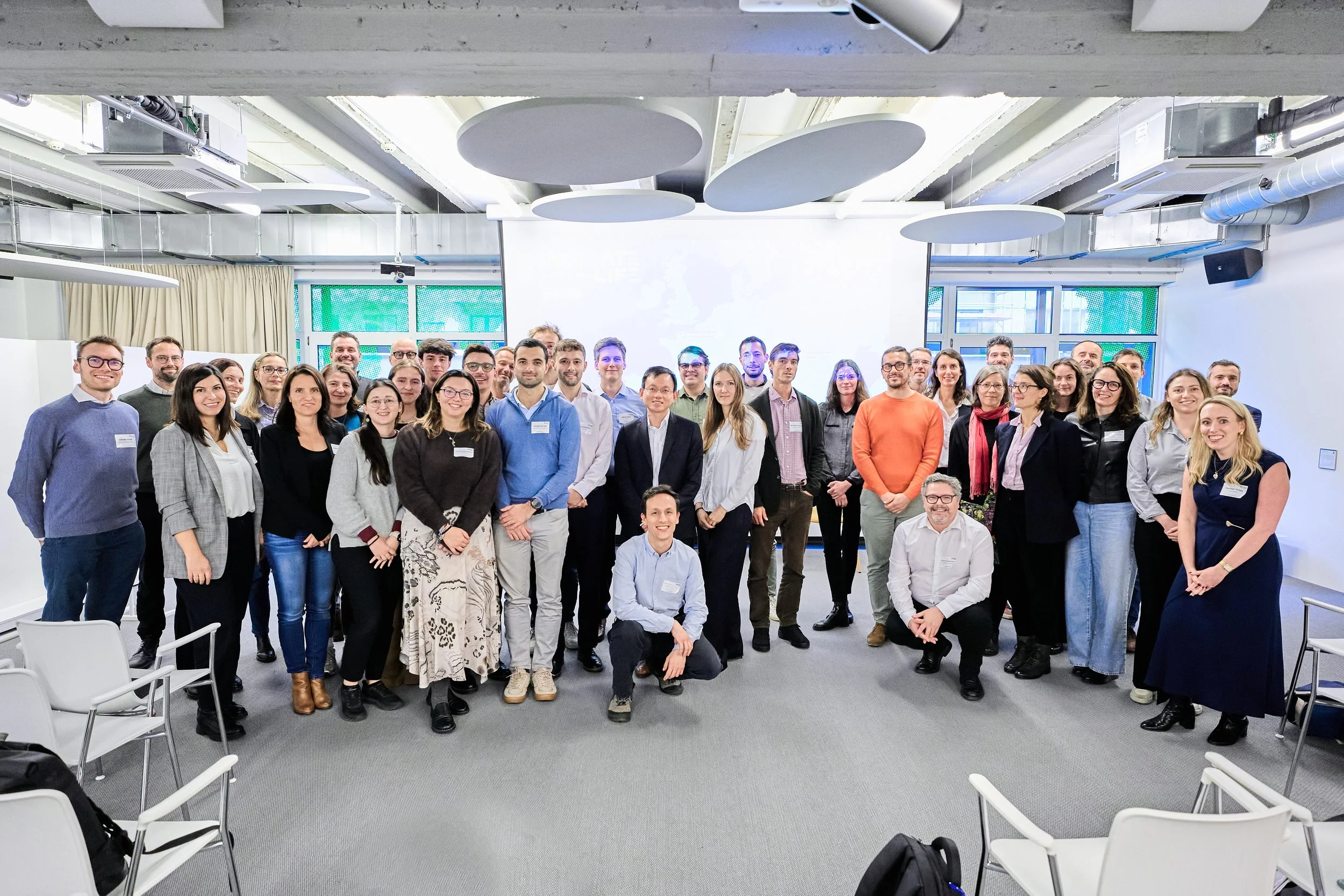
Participants at the INDICATE LIFE events in Brussels, 21-22 October.
As EU Member States prepare to implement WLC requirements under the recast Energy Performance of Buildings Directive (EPBD), the focus is shifting from building the evidence base to putting it into practice. The EPBD requires member states to publish national roadmaps for introducing life-cycle global warming potential (GWP) limit values by January 2027. From 2028, life-cycle GWP must be calculated and disclosed for new buildings over 1,000 m², with the requirement extending to all new buildings from 2030. Across three events, participants explored how reliable data, national assessment methods and collaboration can support that shift.
Turning evidence into practical action
The WLC Network Event opened the programme on 21 October. In roundtables, participants examined how building-level data can become credible national benchmarks, targets and regulatory limits, and how WLC assessment can inform renovation, reuse and new construction decisions, as well as investment, lending and valuation.
A recurring theme was that technical methodologies are not enough. Accessible data, clear responsibilities, professional skills and the right market conditions are all needed to make WLC assessment standard practice.

Participants engaging in roundtable discussions at the WLC Network Event.
Closing Event: connecting policy, research and industry
Hosted by the World Green Building Council (WorldGBC), the afternoon’s Closing Event brought together policymakers, researchers and industry. After opening remarks from Giulia Carbonari (WorldGBC), Miles Rowland (WorldGBC) interviewed former MEP Ciarán Cuffe, who made the case for maintaining ambition as regulatory milestones approach.
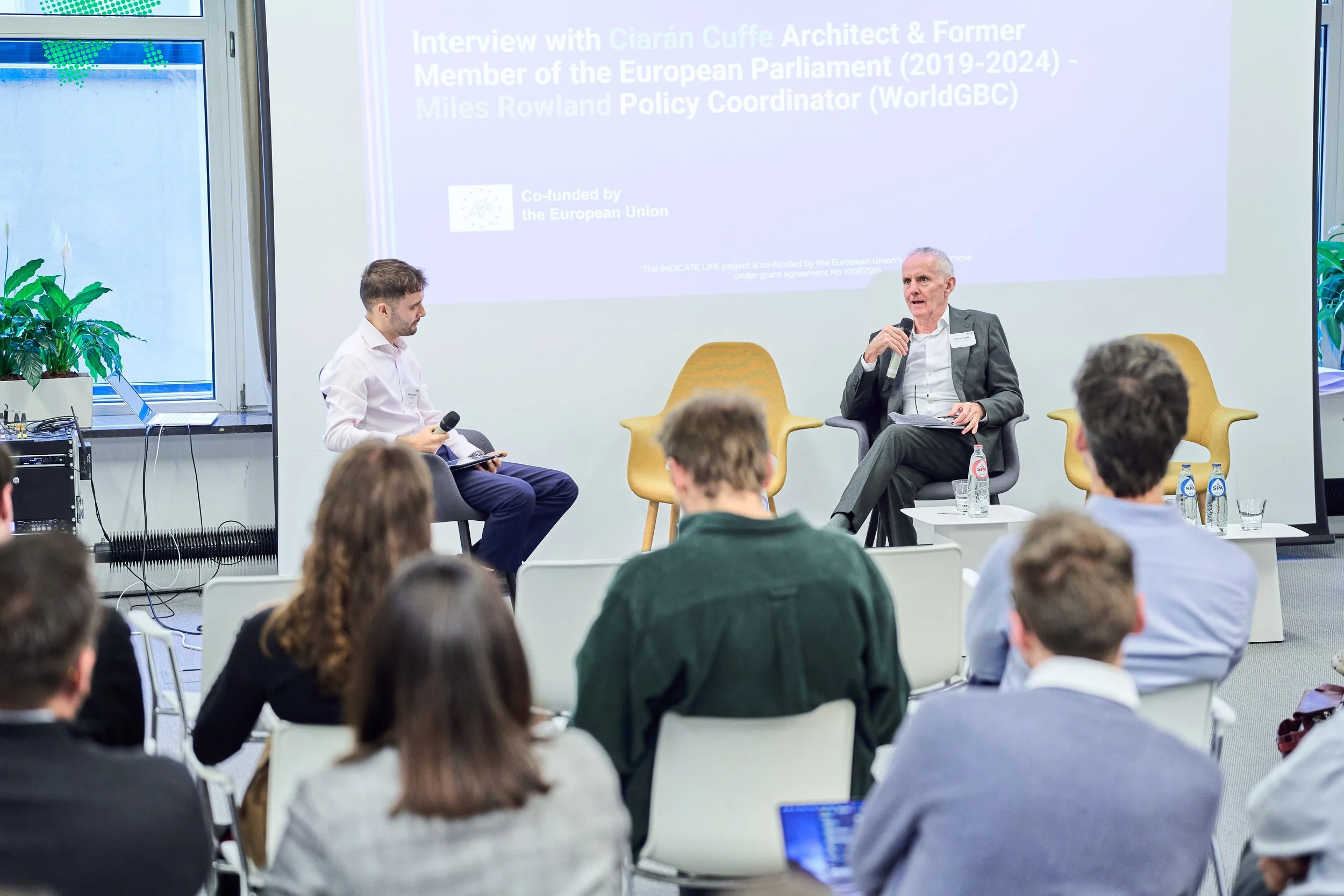
Miles Rowland (WorldGBC) interviewing former MEP Ciarán Cuffe at the INDICATE LIFE Closing Event.
An expert panel moderated by Zsolt Toth (BPIE) followed, with Paul Astle (Ramboll), Áróra Árnadóttir (Icelandic Housing, Construction and Planning Agency), Martin Röck (RISE) and Bunthan Lea (European Commission, DG ENER). They discussed how existing evidence can support implementation and where data and methodological gaps remain. The discussion highlighted the need to translate technical evidence into practical requirements, supported by clear guidance, appropriate tools and industry capacity.
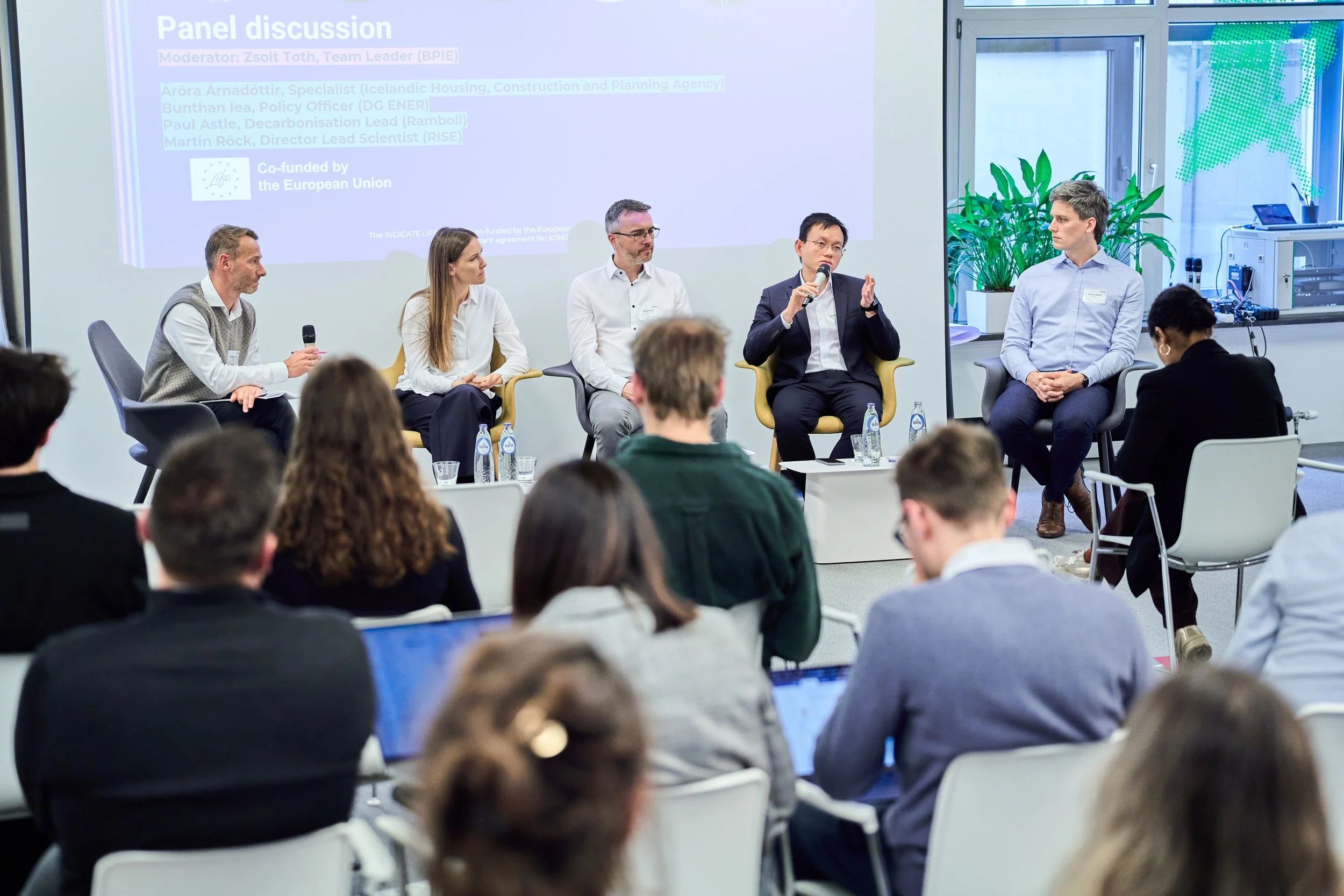
Expert panel discussion at the INDICATE LIFE Closing Event in Brussels.
Bunthan Iea then presented the Commission’s Staff Working Document, Supporting life-cycle approaches to decarbonise European buildings. It stressed looking at emissions across the whole building life cycle and highlighted material efficiency, circular construction and better use of existing buildings.
Adam Rietti (Smith Innovation) concluded with the project’s key outcomes, drawn from work with national partners in Austria, Croatia, Italy and Luxembourg:
198 new construction cases providing evidence to inform the development of national embodied carbon benchmarks.
41 case studies examining the costs and benefits of WLC assessment.
WLC assessment can represent approximately 0.1-2% of total project costs, and early assessment helps identify opportunities to reduce emissions.
Giulia Carbonari then closed the event.
Sharing lessons across countries
On 22 October, project teams from Austria, Croatia, Italy and Luxembourg met for a Community Building Event to compare national findings, reflect on different approaches to assessment methods and data, and exchange lessons from implementation. Starting points and market conditions differ, but a shared European ambition can be translated into approaches that fit national circumstances.
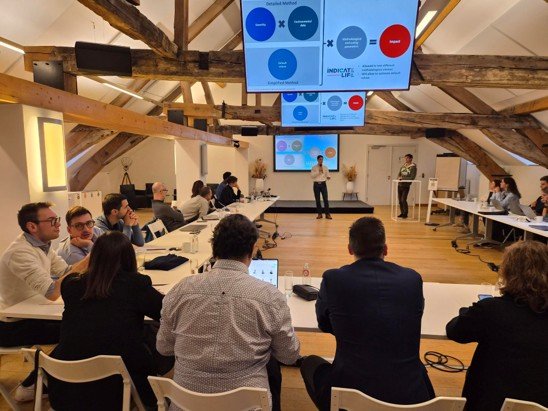
The Luxembourg consortium presenting their findings at the Community Building Event.
The perfect is the enemy of the good
One message ran through the discussions. Reliable data and robust methods remain essential, but the pursuit of perfect information should not become a barrier to progress. The evidence and experience already available provide a foundation for action, even as methodologies continue to improve.
With the EPBD's first WLC milestones approaching, the challenge is not simply to improve the evidence base, but to ensure it can inform decisions by policymakers and building professionals.
Looking ahead
As INDICATE LIFE enters its final stages, its findings, methodologies and resources will continue to support WLC policy and practice across Europe. The forthcoming Final Publishable Report will bring together the project’s key findings, recommendations and lessons learned. In the meantime, publications, national reports and case studies are available on the INDICATE Resources page.