
Croatian stakeholders highlight challenges for whole life carbon implementation
Reliable data is essential to accelerating the decarbonisation of Europe's built environment. But how ready is the market to implement whole life carbon (WLC) assessment in practice?
This question was at the centre of discussions during Green Building Council Croatia’s (GBC) Connect Forum, held in Sibenik, Croatia from 21–23 April 2026.
Bringing together industry leaders, built environment professionals and public sector representatives, the event provided an opportunity to explore the role of life cycle assessment (LCA) and data-driven decision-making in reducing carbon emissions across the construction sector.
As part of the event, GBC presented the first results from its analysis of 50 Croatian case studies being examined under the INDICATE LIFE project. The forum also served as a key milestone in Croatia's stakeholder engagement activities, building on an initial stakeholder meeting held in February and a thematic working group meeting organised shortly before the event.
Gathering stakeholder insights
To better understand current market perspectives, participants took part in a live survey during the panel discussion, entitled " LCA – the truth about CO₂ emissions."
The survey gathered insights from representatives across industry and government, providing valuable feedback on the opportunities and challenges associated with implementing global warming potential (GWP) calculations and WLC assessment in Croatia.
The results offer an early snapshot of market readiness and highlight several areas where further support, data and guidance may be needed.
Data availability remains the biggest challenge
One of the clearest messages from the survey was the importance of reliable data.
When asked about the biggest barrier to implementing GWP calculations, respondents identified the lack of product data such as Environmental Product Declarations (EPDs) as the most significant challenge. Stakeholders also pointed to gaps in knowledge and expertise, alongside concerns about the availability and cost of calculation tools.
These findings reinforce a challenge that is being observed across Europe: without reliable, accessible and comparable data, it becomes difficult to accurately assess and reduce the carbon impact of buildings throughout their life cycle.
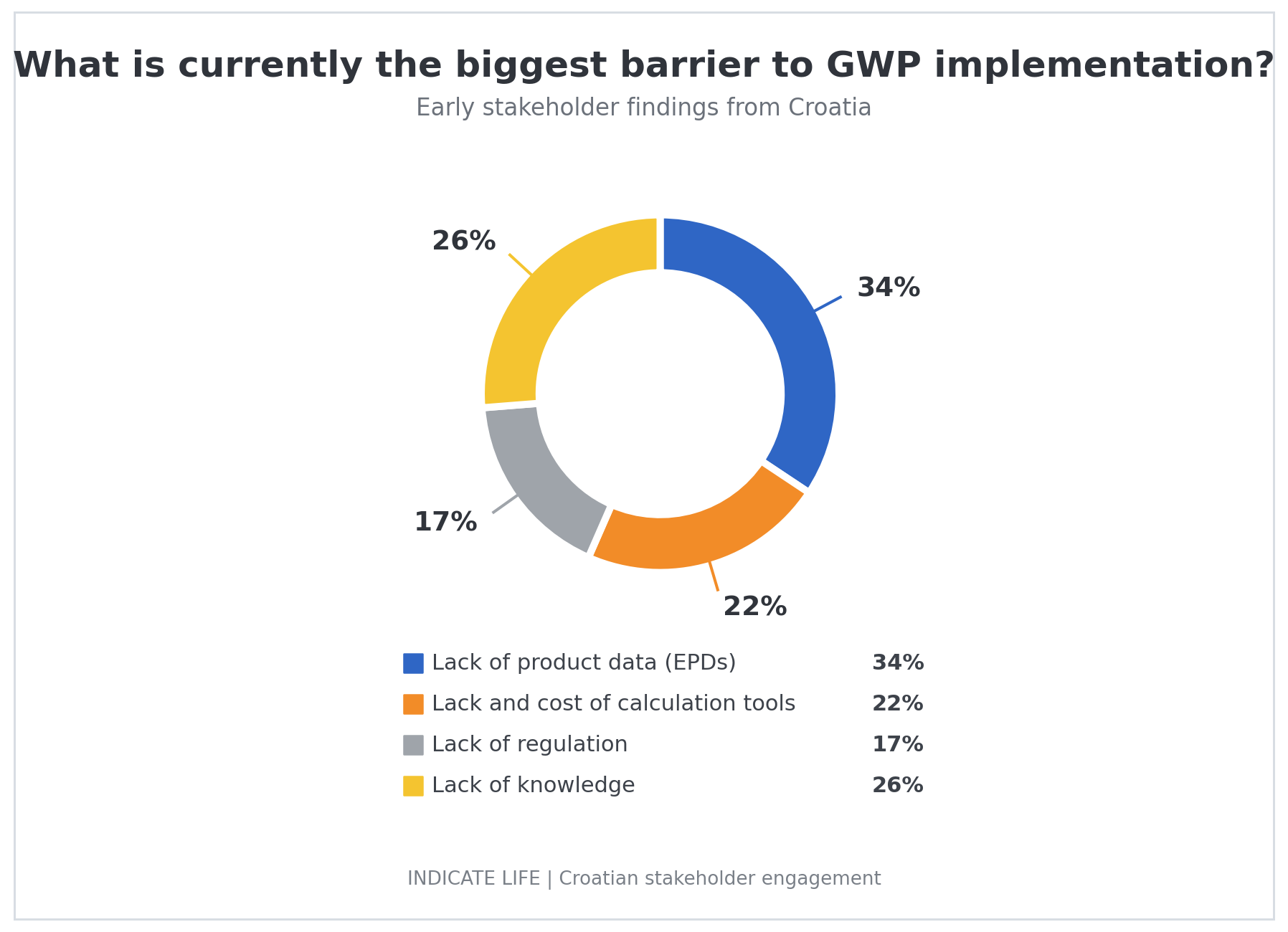
Chart illustrating Croatian stakeholders’ perceptions of the main barriers to GWP implementation.
Stakeholders support a phased introduction of mandatory calculations
The survey also explored how mandatory GWP calculations could potentially be introduced in Croatia.
Nearly half of respondents favoured a phased implementation approach, beginning with public buildings before gradually expanding requirements to other building types. Others highlighted the need to first establish a national database that could support more effective implementation.
The results suggest broad support for advancing WLC assessment, while recognising that appropriate infrastructure, methodologies and data systems must be in place to ensure successful adoption.
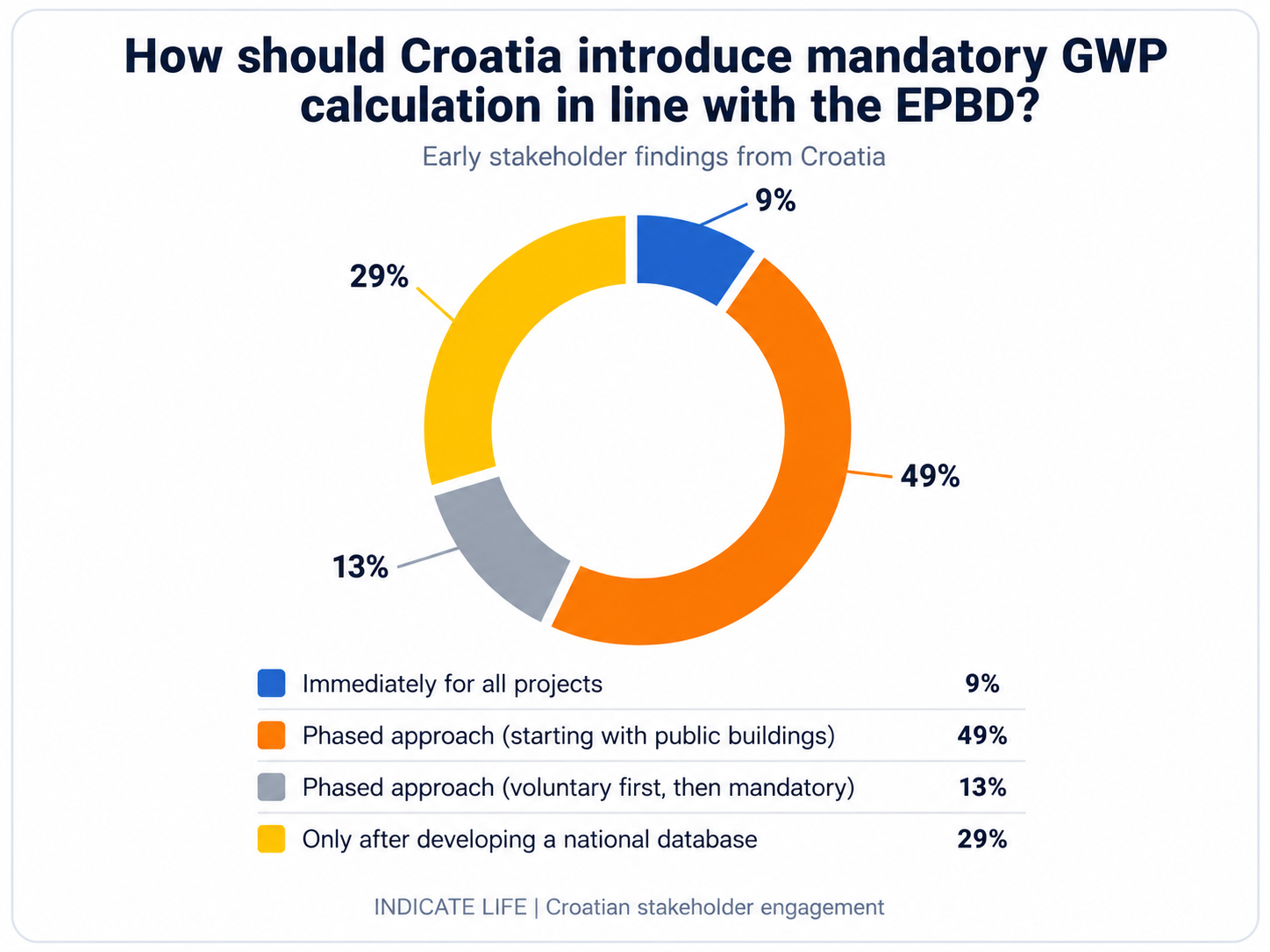
Chart illustrating Croatian stakeholder’s views on the best approach toward mandatory GWP calculations.
Carbon performance is not yet a key market driver
Despite increasing awareness of embodied carbon and life cycle impacts, survey responses suggest that carbon performance has not yet become a major factor in procurement decisions.
When asked whether they had experienced products being selected based on lower CO₂ emissions, only a small proportion of respondents reported a direct experience. Many believed it may happen occasionally, while others questioned whether carbon performance currently plays a significant role in product selection.
This finding highlights an important gap between growing decarbonisation ambitions and current market practices.
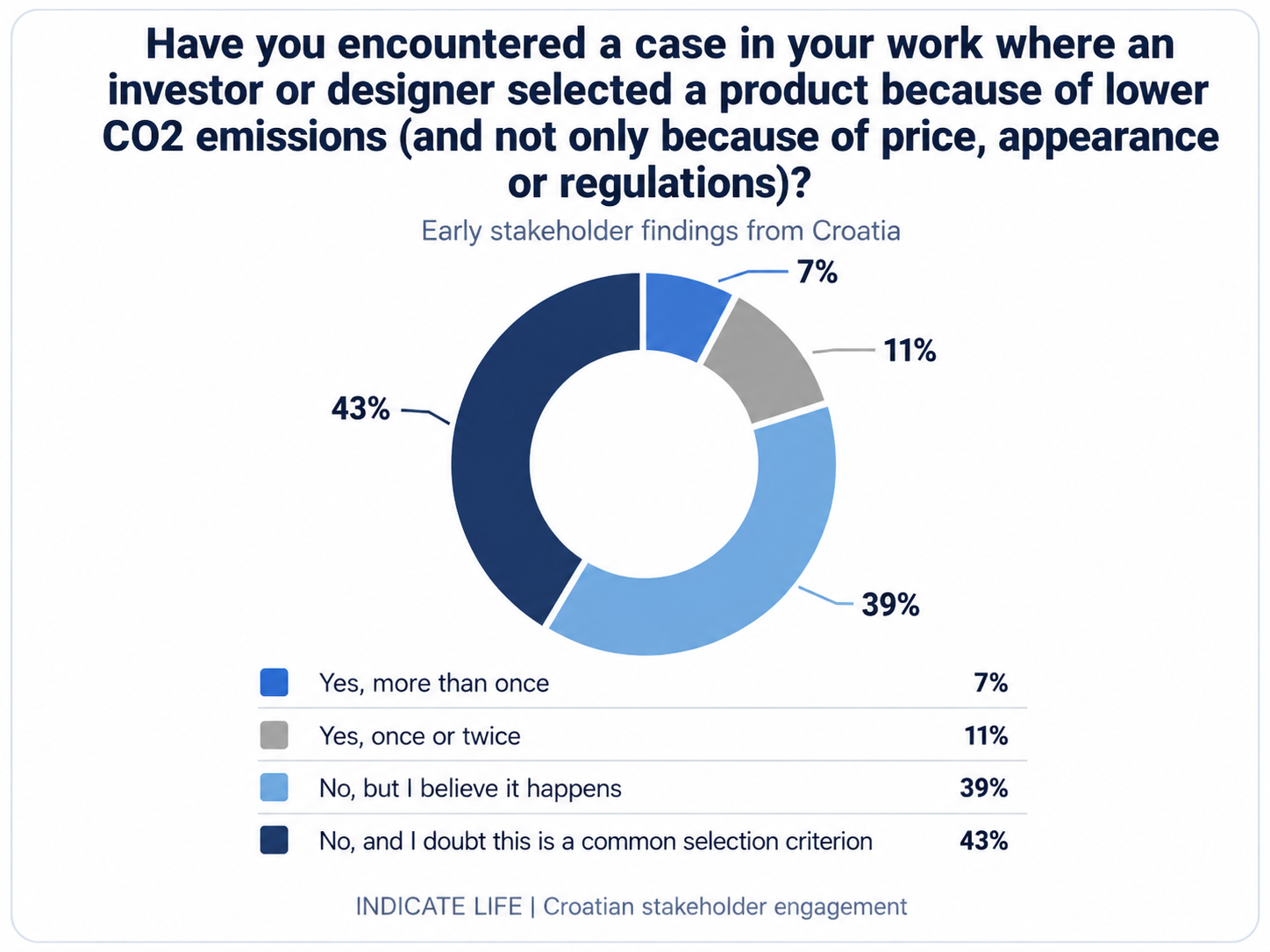
Survey results highlighting Croatian stakeholders’ experience with the consideration of carbon performance in procurement processes.
Supporting evidence-based implementation
The stakeholder engagement activities carried out in Croatia are helping to build a clearer understanding of the opportunities and challenges associated with WLC assessment at national level.
The findings also reinforce one of the core objectives of the INDICATE LIFE project: improving the availability and quality of WLC data to support more robust assessment methodologies and future regulatory development.
By working closely with stakeholders across participating countries, INDICATE LIFE is helping identify data gaps, understand market readiness and strengthen the evidence base needed to support the decarbonisation of Europe's built environment.
As the project progresses, insights gathered through activities such as those in Croatia will contribute to recommendations that support more consistent and effective approaches to WLC assessment across Europe.
Stay up to date with the latest news and developments from INDICATE.