
Welcome to the summer 2026 edition of INDICATE LIFE newsletter!
As the INDICATE LIFE project enters its final months, partners continue to advance the data, methodologies and evidence needed to support more consistent whole life carbon (WLC) assessment across Europe’s built environment.
This edition highlights recent project publications, stakeholder engagement activities, and collaborative discussions that help inform future approaches to WLC assessment.
With further publications and recommendations still to come, the project will continue to share its findings over the coming months.
Visit the INDICATE LIFE website to stay up to date and learn more about the project.

New WLC methodology reports support harmonised European assessment
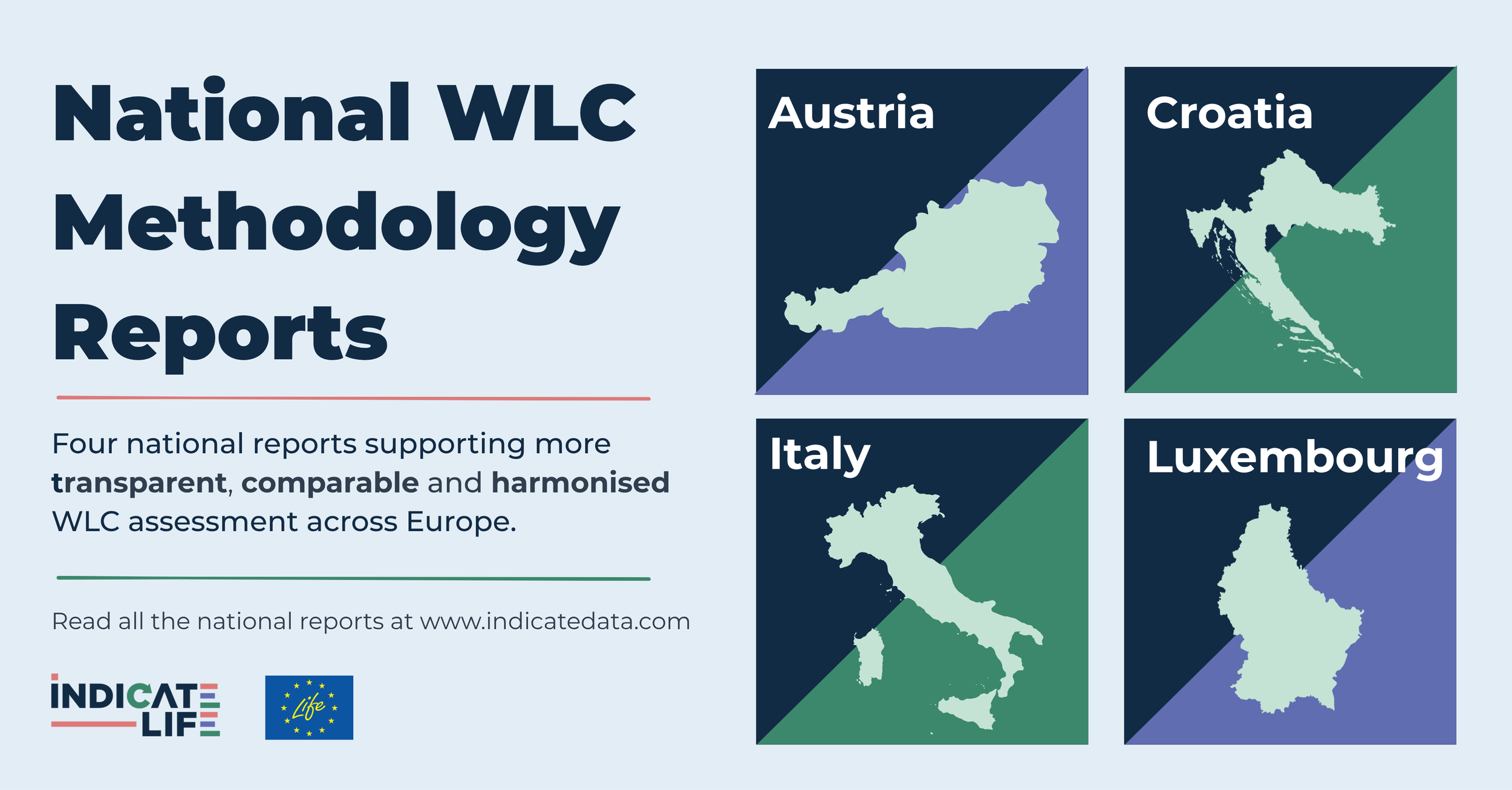
Austria, Croatia, Italy and Luxembourg release reports on national methods.
INDICATE LIFE has reached an important milestone with the publication of four national methodology reports examining the current state of WLC assessment in Austria, Croatia, Italy and Luxembourg.
Developed by project partners in each country, the reports review existing methods, identify gaps and inconsistencies, and propose pathways towards more harmonised approaches to WLC assessment across Europe.
While each country is at a different stage in the development of WLC assessment, the reports identify several common challenges, including the need for more consistent methodologies, improved data availability, stronger technical capacity and the development of national benchmarks.
Together, these reports provide an important evidence base to support more transparent, consistent, and comparable WLC assessments.
European report examines cost and benefit of WLC assessment
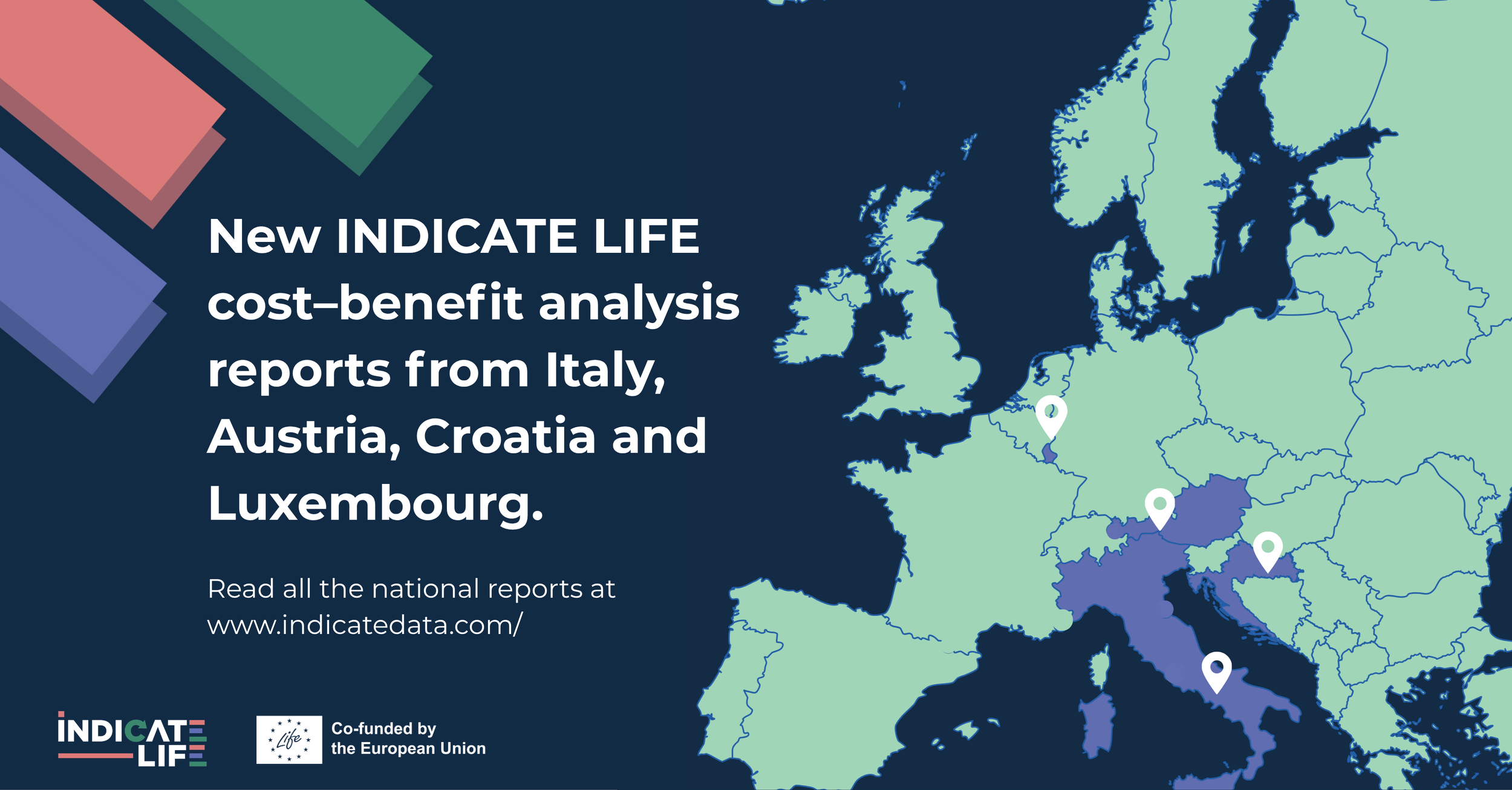
BPIE publishes cost-benefit analysis report as part of INDICATE LIFE.
A new European synthesis report developed by BPIE as part of the INDICATE LIFE project examines the relationship between WLC assessment and building costs.
Drawing on 41 case studies from Austria, Croatia, Italy and Luxembourg, alongside evidence from European frontrunner countries, the report examines real-world experiences with WLC assessment and market practices.
The findings suggest that, when WLC considerations are integrated early in the design process, low-carbon buildings can be delivered at comparable or even lower costs than conventional buildings.
The report also highlights that life cycle assessments (LCA) typically only represent a small proportion of total project costs, while supporting better design decisions, reduced emissions, and stronger long-term value.

INDICATE LIFE co-hosts second WLC Network Event in Brussels
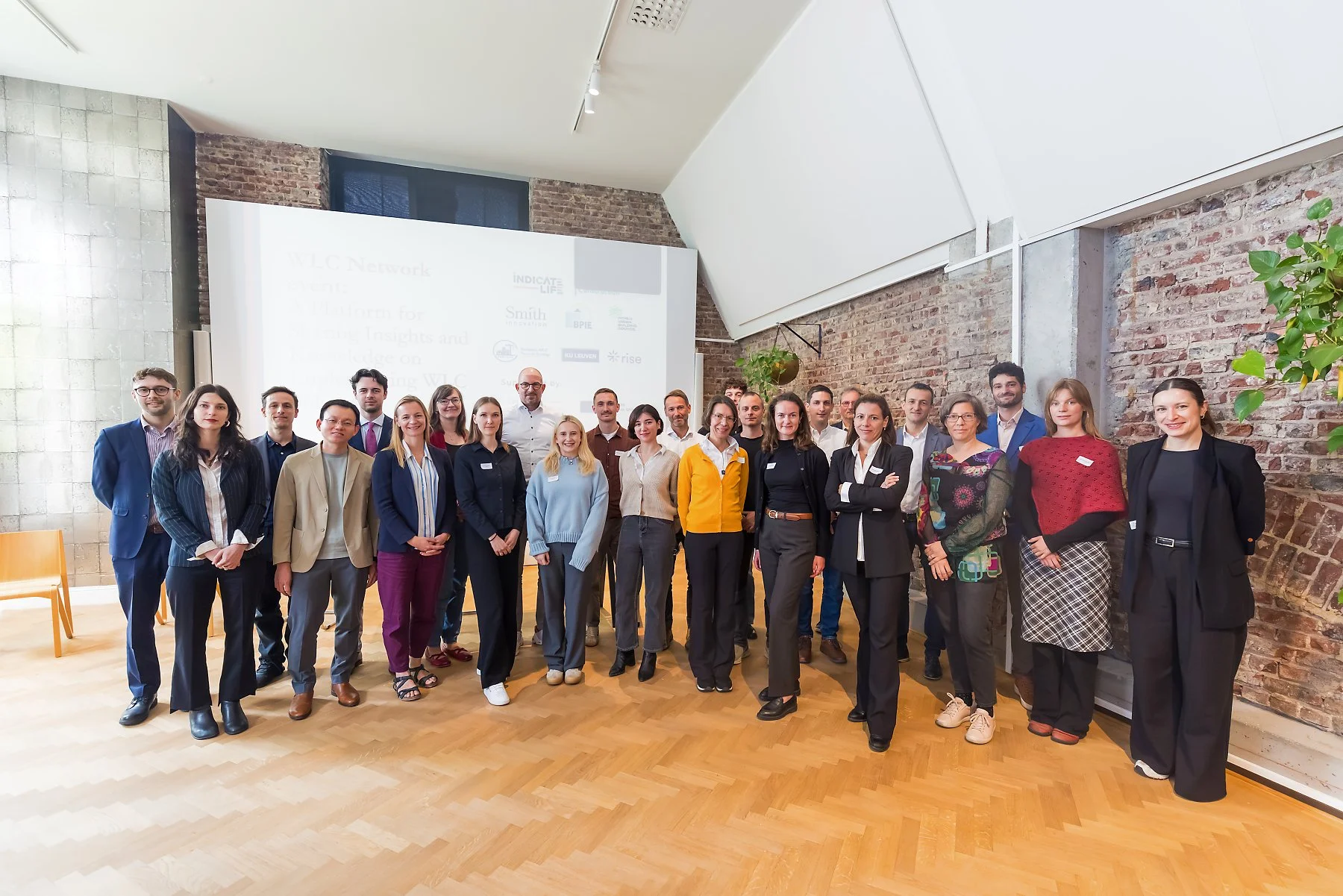
Participants gathered at the WLC Network Event in Brussels.
INDICATE LIFE joined the European WLC Forum for Buildings and Nordic Sustainable Construction to co-host a WLC event in Brussels. Held on 10 June, the event brought together experts from academia, industry and policy to exchange knowledge and discuss the future of WLC assessment and regulation across Europe.
Presentations highlighted lessons from the Nordic region on harmonising LCA approaches, experiences from the INDICATE Pilot project in developing national methodologies aligned with the Energy Performance of Buildings Directive (EPBD), and industry perspectives on how WLC polices can be translated into innovation and market advantage.
Additionally, roundtable discussions explored the practical challenges of implementing WLC assessment. These challenges included the development of meaningful limit values, improving data quality and availability, and strengthening assessment tools.
Participants also considered how future policy could evolve beyond carbon to incorporate biodiversity, circularity and better use of existing buildings.
Croatian survey highlights Global Warming Potential (GWP) implementation challenges
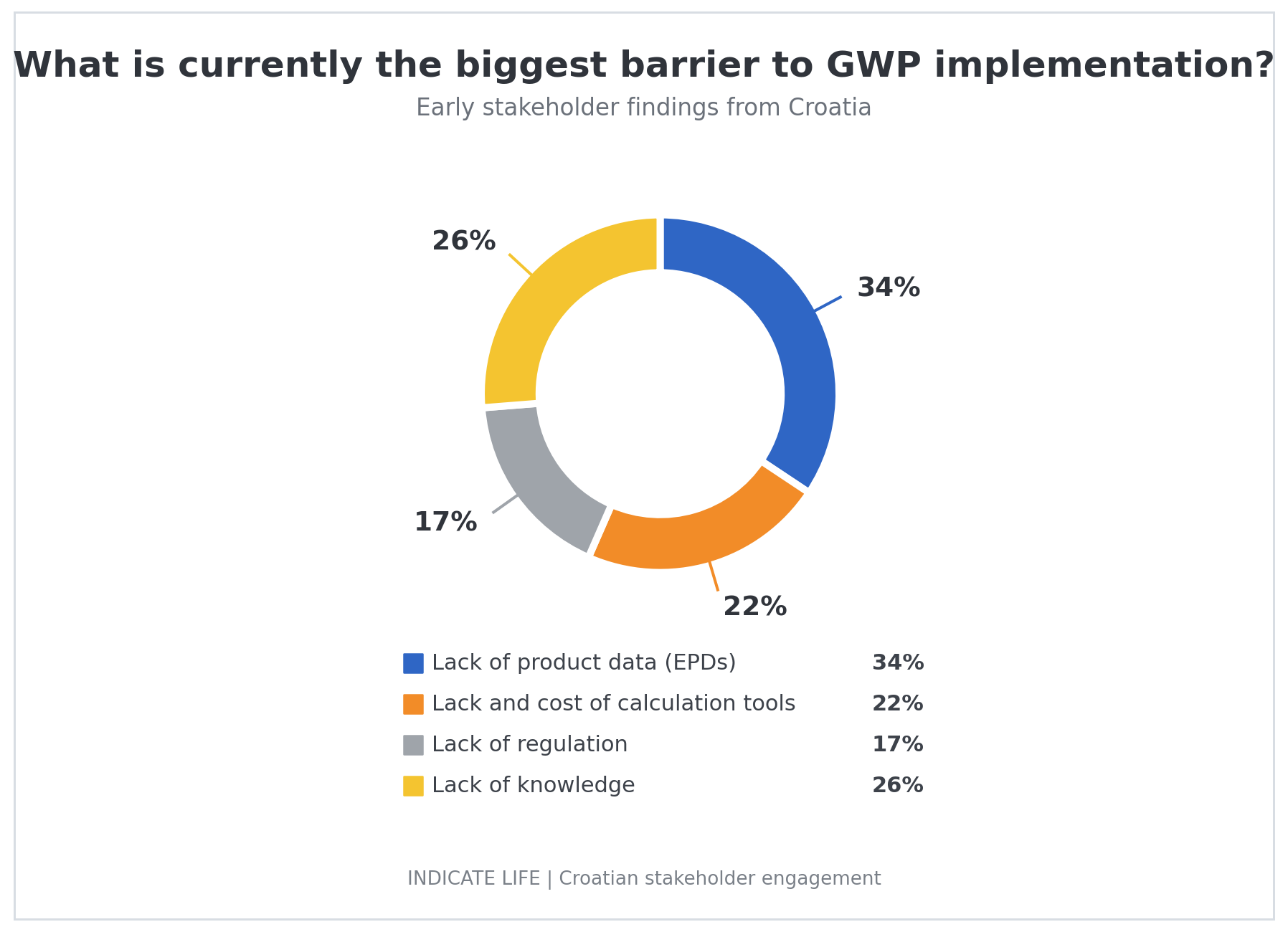
Chart illustrating Croatian stakeholders’ perceptions on the main barriers to GWP implementation.
During Green Building Council Croatia’s (GBC) Connect Forum, industry and public sector representatives took part in a live survey exploring the opportunities and challenges associated with implementing GWP calculations. The survey formed part of the INDICATE LIFE’s stakeholder engagement activities and provided valuable insight into market perspectives on future implementation.
Held in Šibenik, Croatia, from 21–23 April, the forum provided an opportunity to discuss the role of LCA and data-driven decision-making in reducing carbon emissions across the construction sector.
The findings identified the availability of reliable product data, including Environmental Product Declarations (EPDs), as the most significant challenge to implementing GWP calculations. Stakeholders also highlighted the need for greater technical expertise and improved calculation tools, while expressing support for a phased introduction of mandatory GWP calculations.
As GWP calculations form a key component of WLC assessment, these findings will help support future WLC implementation across Europe.
Learn more about the GBC Connect Forum and the Croatian stakeholder findings here.

Save the date: INDICATE LIFE closing event in Brussels
The INDICATE LIFE closing event will take place in Brussels on 21 October 2026.
The event will present the project’s final findings and recommendations, bringing together policymakers, industry stakeholders and researchers to discuss the future of WLC assessment and implementation across Europe.
Further details, including registration information, will be shared soon.